

Show More
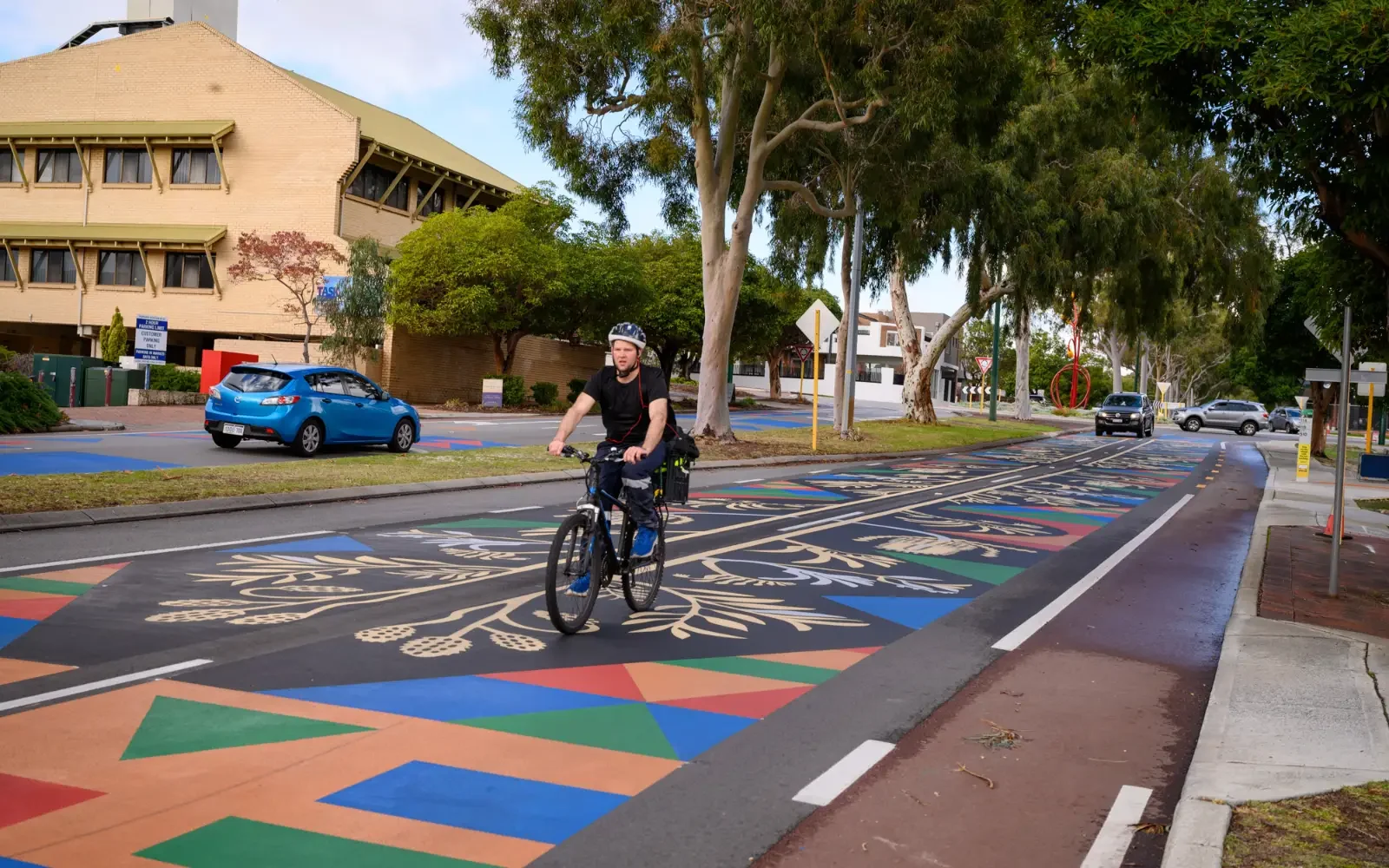
Inspired by nearby Yagan Mia Wireless Hill and the theme of Germinate, Joanna Brown’s artwork combines native botanical forms with geometric shapes to redefine the street as a playful and inviting thoroughfare for the precinct. The artwork also links to Wireless Hill and Joanna’s new mural. It stretches along Riseley Street over 200 metres from Canning Highway to Willcock Street.
Aims:
- To unify the east and west side of the precinct.
- To create an iconic landmark.
- To contribute to a village vibe. Help make the precinct a destination, rather than a thoroughfare.
- To lower traffic speeds as there is data that suggests interventions such as this can play a role in this.
- The artwork colours were to link with the place branding for the Riseley Centre.
Process and approvals
- Identified scope.
- Discussions with engineering regarding any road resurfacing,
- Internal department buy-in for the project.
- Discussions with Main Roads WA regarding scope. Set back from intersections and directional/wayfinding considerations.
- Understand limitations for the product: discussions with other local governments who have delivered road murals and with providers within WA.
- Develop brief in line with the City’s Public Art Strategy.
- Artist concept development, short-listing and procurement.
- Detailed design.
- Refinement in line with the installer and their feedback.
- Design mapped on CAD drawing.
- Traffic management plan approval.
- Notification to local businesses, Transperth, general communications.
- Installation.
Materials
We used StreetBond, a 2-part non-slip application that meets Australian Standards for road use. (It is used for bus lanes and bike lanes) It is meant to last for 5 years, however, other users had reported a lot of fading. To try to combat this we decided to only paint the central part of each lane that generally falls between the tyres. Another product we considered were Omnigrip, however it was not suitable for this design
Placemaking & Projects
How To Do a Mural Project
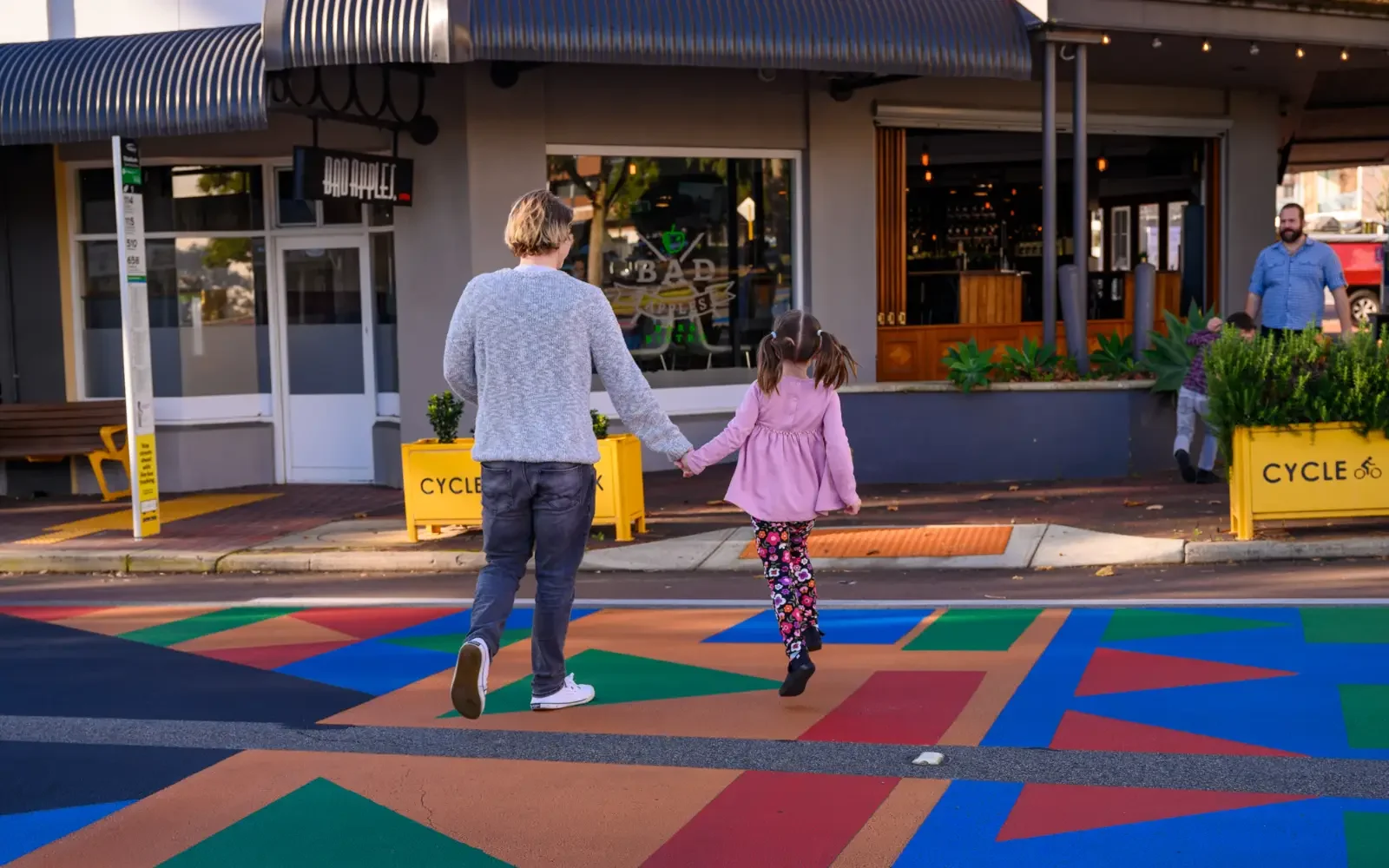
The design needed to be far simpler than what was initially proposed. The colours need to be applied in layers next to other dry colours so they don’t bleed together. This means complexity increases install time and therefore cost.
Allow plenty of time for notifying businesses and residents.
Cold atmospheric temperatures mean slower drying conditions. Ideal to install during warm, dry weather. Due to the high traffic location we initially explored night works, but drying time would be an issue. With day works, Main Roads WA determined we could only close one lane at a time. Ideally a detour would take place enabling quicker install to all lanes simultaneously. The lanes also had to be open by 2.30pm resulting in a very short day with a max of 2 layers applied in a day. (This allows for drying time before cars are driving on it)
Need to be certain on the location and design, as you’ll need to regularly articulate the background, context and purpose of the project.
We had mixed feedback. A lot of very positive feedback applauding the scope and concept of the design.
Some residents complaining about the artwork as a distraction or waste of money.